
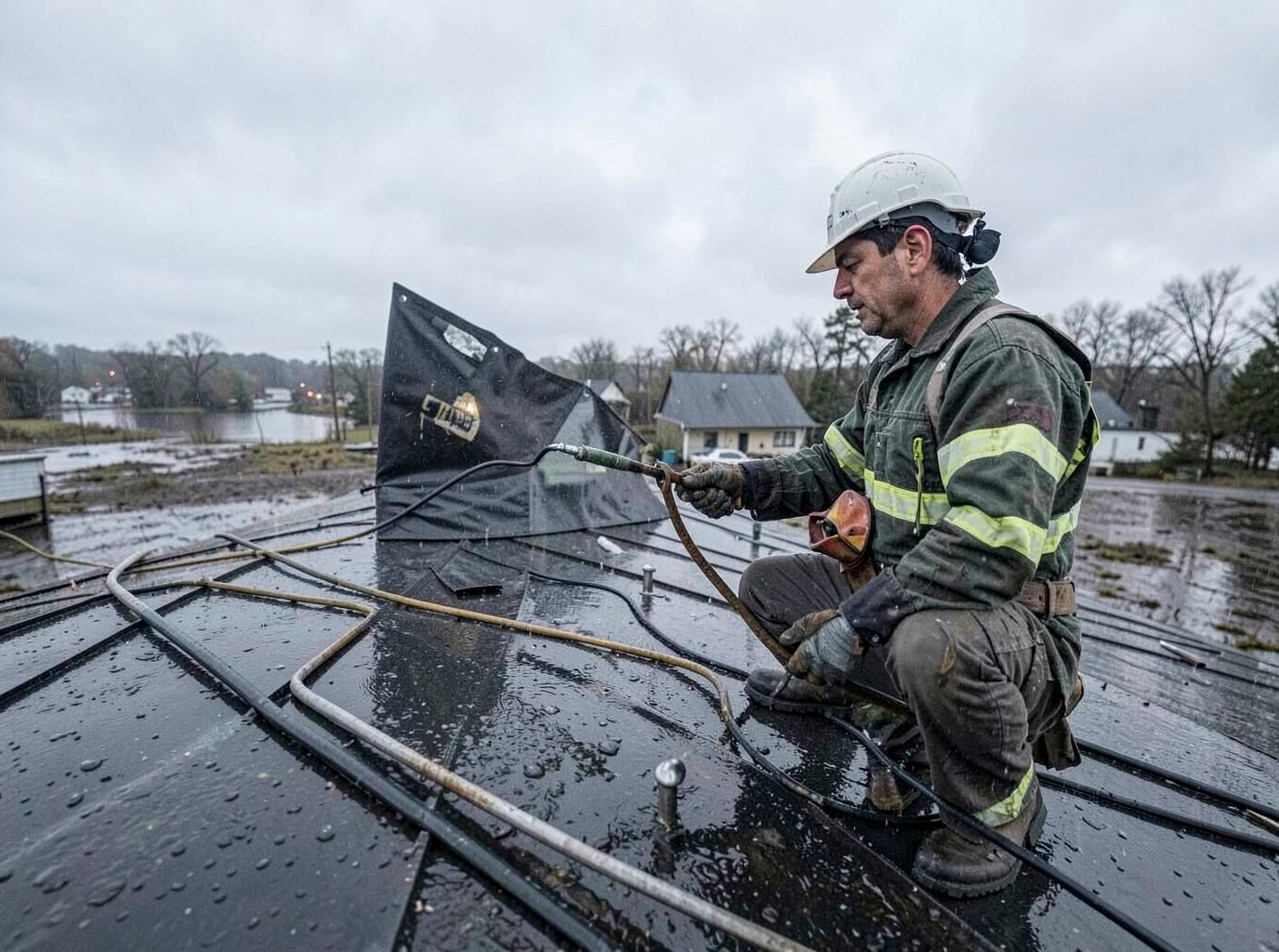
Grand Island roofs face repeated hits from Hall County thunderstorms that drop large hail and spawn straight-line winds capable of lifting shingles on homes built before 1980 in Downtown and Northwest Grand Island. An inspection after these events starts at the ridge and works down each slope, checking for granule loss, cracked fiberglass mat, and lifted flashing around chimneys common on the area's brick and frame houses. We also examine the attic for daylight leaks and moisture stains that appear days after the storm passes through from the Platte River valley.
Tornado warnings that send residents toward Stuhr Museum or Island Oasis Water Park often leave behind hidden damage on asphalt and metal roofs near Grand Island Regional Airport. Inspectors look for creased panels, displaced ridge vent caps, and nail pops along eaves where cold winter contraction has already weakened seals. Older homes closer to the airport see extra scrutiny on underlayment because wind-driven rain during summer cells can penetrate aged felt before homeowners notice interior drips.
Reports include photos and notes on code requirements for Hall County permitting when repairs exceed 25 percent of the roof plane. We flag cases where Lincoln or Omaha contractors have previously used lightweight shingles that fail faster under repeated hail cycles typical here. Homeowners receive a written summary that separates cosmetic granule loss from functional breaches needing immediate attention before the next freeze-thaw cycle.
Technician insight
In Grand Island the thing that catches most people out with Roof Inspection After A Storm is how older asphalt roofs in Downtown neighborhoods already embrittled by decades of hot summers and cold winters lose their ability to seal after one solid hail event, letting water under the mat long before any drip shows inside.
Northwest Grand Island hail follow-up
A homeowner called after a July thunderstorm near the airport. We found multiple fractures on the south slope of a 1970s ranch and water staining in the attic insulation. We documented the damage for insurance and recommended targeted section replacement before winter set in.
Roof Inspection After a Storm Services We Offer
✓Hail Impact Assessment
Measures granule loss and mat fractures on asphalt and metal roofs after Hall County hail events common in summer storms.
✓Wind Uplift and Flashing Check
Tests seam integrity and flashing around vents and valleys on homes in Northwest Grand Island exposed to straight-line winds.
✓Attic Leak and Moisture Scan
Inspects insulation and decking for hidden water intrusion that appears after thunderstorms move through Downtown Grand Island.
✓Tornado Damage Documentation
Records creases, displaced panels, and structural shifts for insurance claims on properties near Grand Island Regional Airport.
✓Shingle and Underlayment Evaluation
Checks aging layers on pre-1980 homes for storm-created entry points before winter freeze-thaw cycles begin.
Roof Inspection After a Storm Cost in Grand Island, NE
| Service | Typical Range | What Affects It |
|---|---|---|
| Basic exterior inspection | $150–$300 | Single-story homes in Northwest Grand Island with easy ladder access |
| Full inspection with attic review | $300–$550 | Two-story Downtown homes or properties needing interior access |
| Insurance documentation package | $400–$650 | Includes marked photos and scope for Hall County claims after tornado warnings |
Ranges are typical for Grand Island, NE and confirmed with an exact written quote before any work starts.
How it works
- 1
Schedule And Site Walk
We meet at the property in Grand Island to note visible exterior damage from the recent storm.
- 2
Slope And Edge Inspection
Each roof plane is examined for hail hits, lifted shingles, and flashing movement common after Hall County winds.
- 3
Attic And Interior Review
We check for moisture, daylight, and insulation damage that may not show until days later.
- 4
Report And Recommendations
A written summary with photos outlines needed repairs and any Hall County permit triggers.
Pricing
Most post-storm inspections include a free initial exterior walk with a detailed report billed by roof size and access difficulty.